 productdif.com
 Stackable tableware for pets offers efficient vertical storage, reducing clutter and saving space in kitchen cabinets or shelves. Nested designs provide a compact fit by allowing smaller pieces to settle inside larger ones, making them ideal for easy transport and storage. Choosing between stackable and nested pet tableware depends on available storage space and convenience preferences.
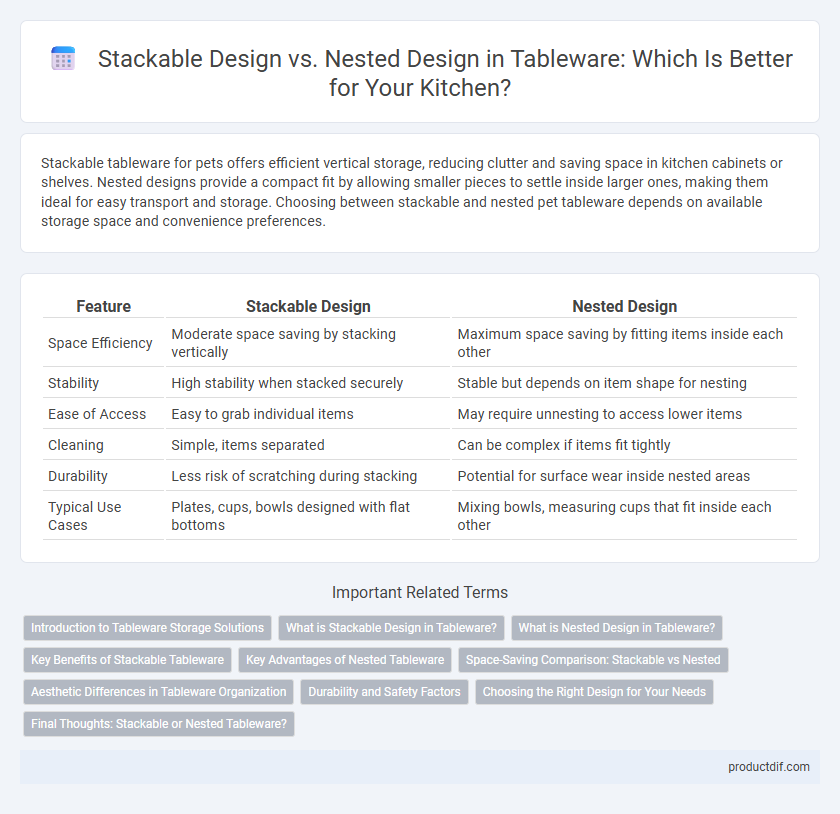
Table of Comparison
| Feature | Stackable Design | Nested Design |
|---|---|---|
| Space Efficiency | Moderate space saving by stacking vertically | Maximum space saving by fitting items inside each other |
| Stability | High stability when stacked securely | Stable but depends on item shape for nesting |
| Ease of Access | Easy to grab individual items | May require unnesting to access lower items |
| Cleaning | Simple, items separated | Can be complex if items fit tightly |
| Durability | Less risk of scratching during stacking | Potential for surface wear inside nested areas |
| Typical Use Cases | Plates, cups, bowls designed with flat bottoms | Mixing bowls, measuring cups that fit inside each other |
Introduction to Tableware Storage Solutions
Stackable design in tableware maximizes vertical space by allowing plates, bowls, and cups to be securely stacked, reducing clutter in kitchens or dining areas. Nested design features pieces that fit inside one another, offering compact storage and protecting delicate items from damage. Both storage solutions enhance organization and efficiency, catering to different user preferences and space limitations.
What is Stackable Design in Tableware?
Stackable design in tableware refers to dishes and utensils specifically crafted to be placed securely one on top of another, maximizing storage efficiency and saving space in kitchens and cabinets. This design often features uniform shapes and dimensions that allow pieces to lock or fit snugly without slipping, preventing damage and promoting easy organization. Stackable tableware is ideal for both everyday use and compact living spaces, combining practicality with sleek aesthetics.
What is Nested Design in Tableware?
Nested design in tableware refers to plates, bowls, or cups crafted to fit securely within one another, minimizing space when stored. This design improves kitchen organization by maximizing cabinet space and enhancing portability, especially in compact living environments. Nestable tableware often features tapered or contoured edges to ensure effortless stacking and easy retrieval without damage.
Key Benefits of Stackable Tableware
Stackable tableware offers space-saving advantages by allowing plates, bowls, and cups to be securely layered, reducing clutter in cabinets and making storage efficient. Its uniform shape provides stability, minimizing the risk of tipping and breakage during stacking. The design also supports easy transportation and inventory management in both domestic kitchens and commercial settings, enhancing convenience and organization.
Key Advantages of Nested Tableware
Nested tableware offers significant space-saving benefits by allowing plates, bowls, and cups to fit compactly within each other, maximizing storage efficiency in kitchens and dining areas. This design minimizes clutter and facilitates easier transportation and organization compared to stackable options. The secure fit of nested pieces also reduces the risk of slipping or toppling, enhancing safety and convenience during handling.
Space-Saving Comparison: Stackable vs Nested
Stackable tableware maximizes vertical space by allowing plates or bowls to be placed securely on top of each other, ideal for narrow storage areas. Nested designs further enhance space efficiency by fitting smaller pieces inside larger ones, reducing overall volume more effectively in compact cabinets. Both methods optimize kitchen organization, but nested sets typically save more horizontal and shelf space than stackable arrangements.
Aesthetic Differences in Tableware Organization
Stackable design in tableware emphasizes uniform shapes and heights, creating a sleek, orderly aesthetic that enhances minimalist kitchen decor. Nested design showcases varying sizes and contours, offering a dynamic visual flow that highlights craftsmanship and detail in each piece. The choice between stackable and nested arrangements significantly influences the visual harmony and style of tableware organization.
Durability and Safety Factors
Stackable design tableware enhances durability by evenly distributing weight during storage, reducing the risk of chipping or cracking. Nested design optimizes space efficiency but may increase pressure points, potentially compromising safety if fragile materials are used. Selecting materials like BPA-free melamine or tempered glass improves safety in both designs by resisting breakage and ensuring non-toxic use.
Choosing the Right Design for Your Needs
Stackable design offers efficient vertical storage, making it ideal for small kitchens with limited shelf space. Nested design provides compact, space-saving solutions by fitting items within each other, perfect for maximizing drawer or cabinet capacity. Choose stackable options for easy access and quick cleanup, while nested designs suit those prioritizing minimal storage footprint.
Final Thoughts: Stackable or Nested Tableware?
Stackable tableware optimizes vertical storage by allowing plates and bowls to be securely piled, saving countertop and cabinet space while providing easy access. Nested tableware offers a compact footprint by fitting pieces inside one another, ideal for minimizing storage volume but potentially requiring more careful handling to avoid scratches. Choosing between stackable and nested designs depends on the kitchen's storage layout, frequency of use, and preference for accessibility versus space conservation.
Stackable Design vs Nested Design Infographic